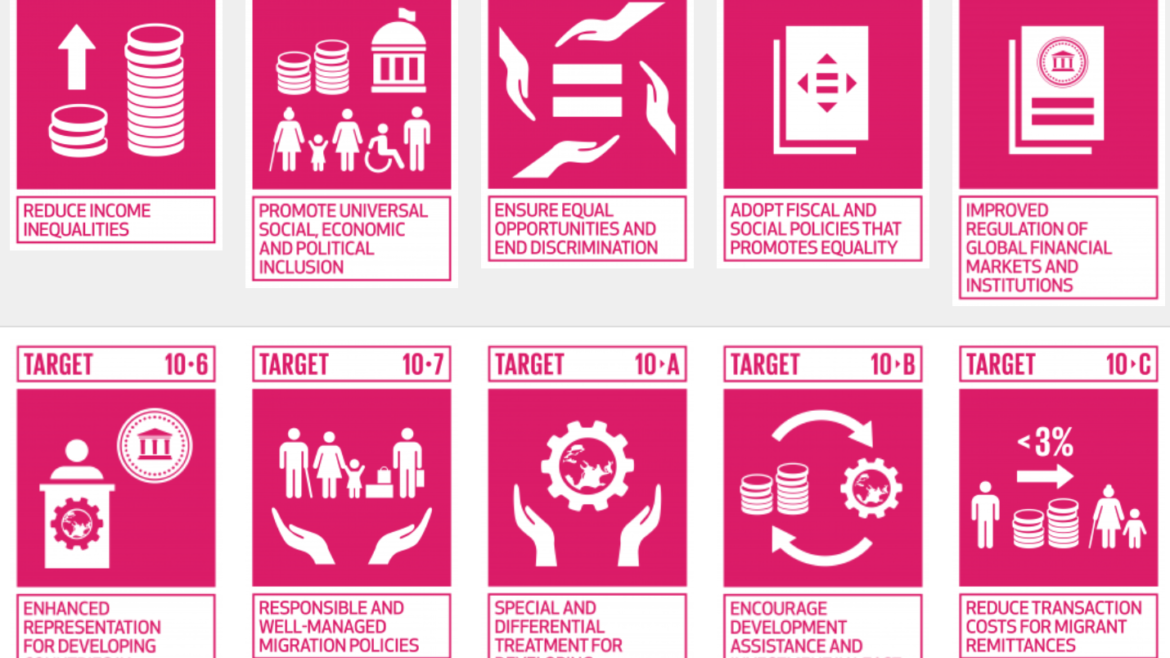
For the SDG 10 (reduced inequalities) sheet, our favorite pedagogical twist is: Reflection Assignment: at the end of a lesson cycle assign students to create a reflection piece about SDG10. Students can record their learning, generate final thoughts, ask questions, or think about how they would approach work differently in the future. It's valuable to hear what parts of a unit stood out and why, and what parts were less meaningful and why. This reflection assignment can be used as a reflection instrument and for peer assessment. In this case, students are divided into groups of about six students and each student reports their reflection assignment that will be assessed by their peers in the group, through feedback and a final score. Teachers should provide students with clarified goals and criteria for assessment. Scores are not the final scores for the teachers but help them in the final assessment process while students learn how to evaluate other fellow students. If you have another pedagogical twist in mind, feel free to apply or check the pedagogical twists list .
SDG act
10: REDUCED INEQUALITIES
Pedagogical twist
Additional material
More information on SDG 10 by the United Nations .
More information on SDG 10 targets can be found here , and here .
Material linked to Activity 1.
Why It Matters (SDG10) UN gives an overview of the specific goal, explaining some examples of inequalities, ways to tackle discrimination, and actions we can take to solve inequality issues.
This video and this image can enable students to know more about overt and covert racism.
Article by Amnesty International (2021) on detention centers in Lybia: Libya: Horrific violations in detention highlight Europe's shameful role in forced returns
Additional inspiring material:
Understand Goal 10: Reduced Inequalities (video)
Wanda Sykes Takes Us Through the History of LGBTQ+ — Now You Know “Have you ever wondered about the beginnings of homosexuality? Get to know a little bit about the fight for equality as Wanda Sykes takes us on a journey all the way back to the Middle Ages”